Why I Stopped Sharing My Music
Why I Stopped Sharing My Music
And Why Coming Back Still Feels Complicated
It’s pretty clear that I really enjoy music. Not just listening to it, but making it. Creating, writing, arranging, recording… they fascinate me. When my friends were conquering the latest video games, I was sitting with a little cassette 4‑track recorder, experimenting endlessly. Even back then, I preferred writing my own songs over recording covers. With originals, there was nothing to compare them to. They were mine, and that freedom was addictive.
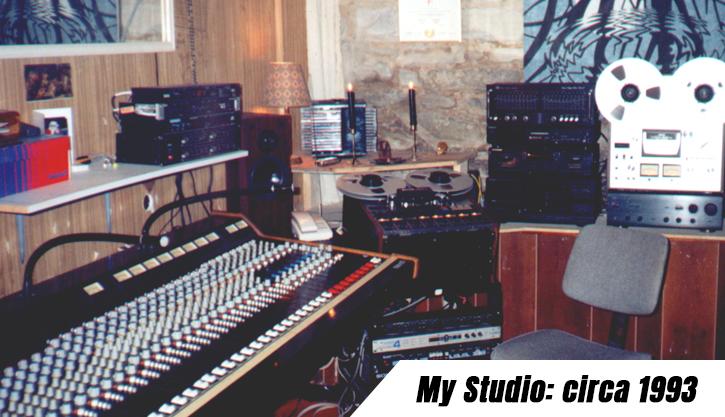
I’ve been a recording “artist” for most of my life, growing alongside the technology. As my skills evolved, so did my ability to acquire old broken instruments, fix them, and learn to play them. By nineteen, I had a 24‑channel mixing board feeding an 8‑track reel‑to‑reel tape machine, and a growing collection of instruments to fill those tracks. ("Disappointed” - which was recorded using that old gear, and was the song where I had completely outgrown 8 tracks: a 24‑track bounce and the pinnacle example of what I could achieve with that setup.)
When computers started promising to replace all the old gear, I was right there at the front, learning and experimenting like always. Suddenly, the studio expanded. The computer opened up textures and possibilities I could never have reached with hardware alone.
And with computers came the internet.
In the earliest days of online music for independent artists, I found myself on the biggest platform of the time: MP3.com. It was way ahead of its time; basically a proto‑Spotify/Bandcamp/SoundCloud before any of those existed. They heavily favored American artists, but at their peak (and they were huge — one of the most‑searched sites on the internet), I was one of only two Canadian artists featured on their main page. The other was Tom Green, who went on to MTV fame. That feature alone brought me thousands of downloads and a modest income for a while.
But things changed — fast.
MP3.com collapsed, and a parade of replacements came and went. The big record companies were losing money to digital disruption and piracy, and they were trying their hardest to put out the fires, MP3.com being one of the casualties. Before computer recording, the only way I could make full‑production songs was to actually play every instrument. No loops. No chord libraries. No VSTs. I never had the money for a top‑tier workstation keyboard, so sequencing wasn’t an option. Everything was really played.
For a long time, computers made things better. My production quality improved dramatically. I had learned to squeeze usable sound out of crappy gear, and now I had near‑unlimited tracks, unlimited sounds, and that top-tier sequencer. I eventually sold my 24‑channel board because I simply didn’t need it anymore.
But then the landscape shifted.
The Loss of Meaning in the Craft
Autotune arrived.
Suddenly, everyone was a singer. Before that, you actually had to be able to sing in key. Sure, plenty of famous singers weren’t perfect, but generally speaking, pitch mattered - which is why autotune became so wildly popular.
With that one product, I noticed a massive influx of new music and new “artists,” all trying to carve out a niche. By the mid‑2000s, everyone was releasing music on social media.
And the playbook for getting listens became… nauseating.
Befriend strangers. Like a bunch of stuff you don’t actually care about. Hope they like your stuff back. Repeat.
It became a popularity contest: hollow, performative, exhausting.
At the same time, pre‑made loops, beats, and chord structures exploded in popularity. Suddenly, people who couldn’t play a note or sing in key were releasing music under their name. And the years they saved by not learning or practicing? They poured into building online networks.
The bar didn’t rise, it dropped. Not because people got better, but because the tools did the heavy lifting.
This wasn’t jealousy. It was disorientation.
A Flood of Noise That Buried the Signal
I wasn’t just competing with other musicians anymore. I was competing with:
people who didn’t sing
people who didn’t play
people who didn’t write
people who didn’t even care about music
people who were simply good at networking
The craft got buried under the volume of content.
I wasn’t afraid of competition, I was afraid of being misidentified as part of the noise.
A Culture Shift Toward Performance Over Substance
This is the part I felt in my bones.
The new “music world” wasn’t about songs/ideas/expression/connection,
It was about algorithms/likes/follows/engagement, and worst: constant self-advertising.
I’m an introvert. An outsider. An independent thinker. So the new rules weren’t just unappealing. They were repulsive.
I’ve always been sensitive to approval‑seeking behavior, not because I look down on anyone, but because we can all see when people start acting in ways that aren’t really “them.” Online culture encourages it - saying the right things, performing the right enthusiasm, chasing the right trends, all in the hope of being noticed. And sometimes, you can even see people making choices that feel more driven by hunger for attention than by genuine expression.
What unsettled me wasn’t the people themselves, but what the culture was rewarding. It felt like we were teaching each other, and importantly - teaching our kids - that the goal isn’t to be the best we can be, but the best promoters we can be. A few people break through, sure, but the rest of it… it felt like we were collectively dumbing down our culture in the process.
The Fear of Being Lumped In With The Crap
This was the emotional core.
I wasn’t worried my music wasn’t good enough. I was worried that sharing it would make me look like:
a clout chaser
a self‑promoter
another “look at me” artist
someone begging for attention
someone trying to “build a brand”
I didn’t want to be mistaken for the very thing I found hollow.
So I withdrew, not because of a lack of confidence, but because I had enough integrity that I no longer wanted to participate in a system that felt increasingly fake.
A World That No Longer Valued the Skills I Valued
This one stung a bit.
I had spent years developing my musicianship (ear, taste, craft, discipline), and suddenly the world said: “None of that matters. What matters is how well you play the social‑media game.”
That’s not just discouraging — it’s invalidating.
It makes you question:
Why bother?
Does anyone care about the real thing anymore?
Am I just adding to the noise?
Is sharing my music narcissistic now?
Those aren’t small questions. They cut right into identity.
Walking Away Wasn’t Quitting, It Was Self‑Protection
I didn’t stop making music. I stopped participating in a culture that felt toxic.
I protected:
my love of music
my sense of self
my integrity
my sanity
I didn’t walk away because I was weak. I walked away because the system didn’t align with who I am, and I was very much feeling bogged down by it.
I should also admit something that complicated all of this for me. Even as I grew uncomfortable with the culture of self‑promotion, I wasn’t blind to the fact that sharing your own music (in any era) requires a certain amount of ego. Maybe “narcissism” is too strong a word, but there’s definitely an element of self‑belief involved. You have to think your work is worth hearing. You have to believe you have something to offer.
And that’s where my own self‑doubt crept in. I worried that by sharing my music, I might look like the very thing I was trying to avoid - another voice in the noise, another person chasing attention, another self‑promoter with no substance. I knew I wasn’t that, but I also knew how easily people get lumped together online.
What made it even more complicated was the strange disconnect I kept seeing everywhere: people presenting themselves as far more skilled, polished, or accomplished than they actually were. Not because they were bad people, but because the online world seems to reward confidence over competence.
And I never wanted to be mistaken for that. I never wanted to be part of a system that blurred the line between genuine craft and inflated self‑presentation. So part of my withdrawal wasn’t just about the culture “out there.” It was about the conflict inside me — the fear that by sharing my work, I might be contributing to the very noise I was trying to escape.
Coming Back to it
Coming back to sharing music after nearly a decade away has been its own strange experience. I thought that time and distance would give me enough perspective — that I’d feel insulated from the things that once pushed me out. I hoped I’d be older, wiser, maybe even enough to rise above the parts of the culture that made me uncomfortable.
But the truth is, not much has changed. If anything, the landscape feels even tighter now. Algorithms are stricter. Organic reach is almost nonexistent unless you pay for ads. The same performative energy is still everywhere, only now it’s wrapped in even more advertising, more noise, more pressure to “engage.” The ickiness I felt before hasn’t disappeared; it’s just wearing new clothes.
And yes, I’m back participating in the very thing that once turned me off. I’m aware of the contradiction. But I also know that sharing music doesn’t automatically make someone a narcissist or a self‑promoter. There is a difference between expressing something you’ve created and bending yourself into a brand.
Still, the old feelings creep in: self‑doubt, the worry about being lumped in with the noise, the discomfort with a culture that rewards visibility over substance. I’m navigating it the best I can, knowing full well that the environment hasn’t changed. And truth be told, I’m not sure how long I’ll stick around.
I’m torn. I want to share my work because it’s something I can genuinely contribute. For the most part it is positive and uplifting. But I don’t like the platforms that exist. I don’t like their motives, their lack of morality, or their complete disinterest in the betterment of society. That tension between wanting to offer something real and having to do it through systems that feel hollow, is something I’m still trying to reconcile.